
Did you know that Candida can contribute to high‑histamine symptoms, as the toxins released by Candida disrupt, imbalance the gut, and increase inflammation and sensitivity to food? Addressing Candida can absolutely improve symptoms by lowering the total inflammatory load.
As people with histamine issues often cannot tolerate antifungals, we have to rely on natural treatment. Don’t get me wrong, natural treatment works better for many people, and medication over time can make things worse, as antifungals are harsh on the body, making you weaker and allowing Candida to become immune to them as well. Unless it is a serious infection of Candidosis that spreads quickly due to low immunity and requires rapid treatment.
How Candida Affects Histamine
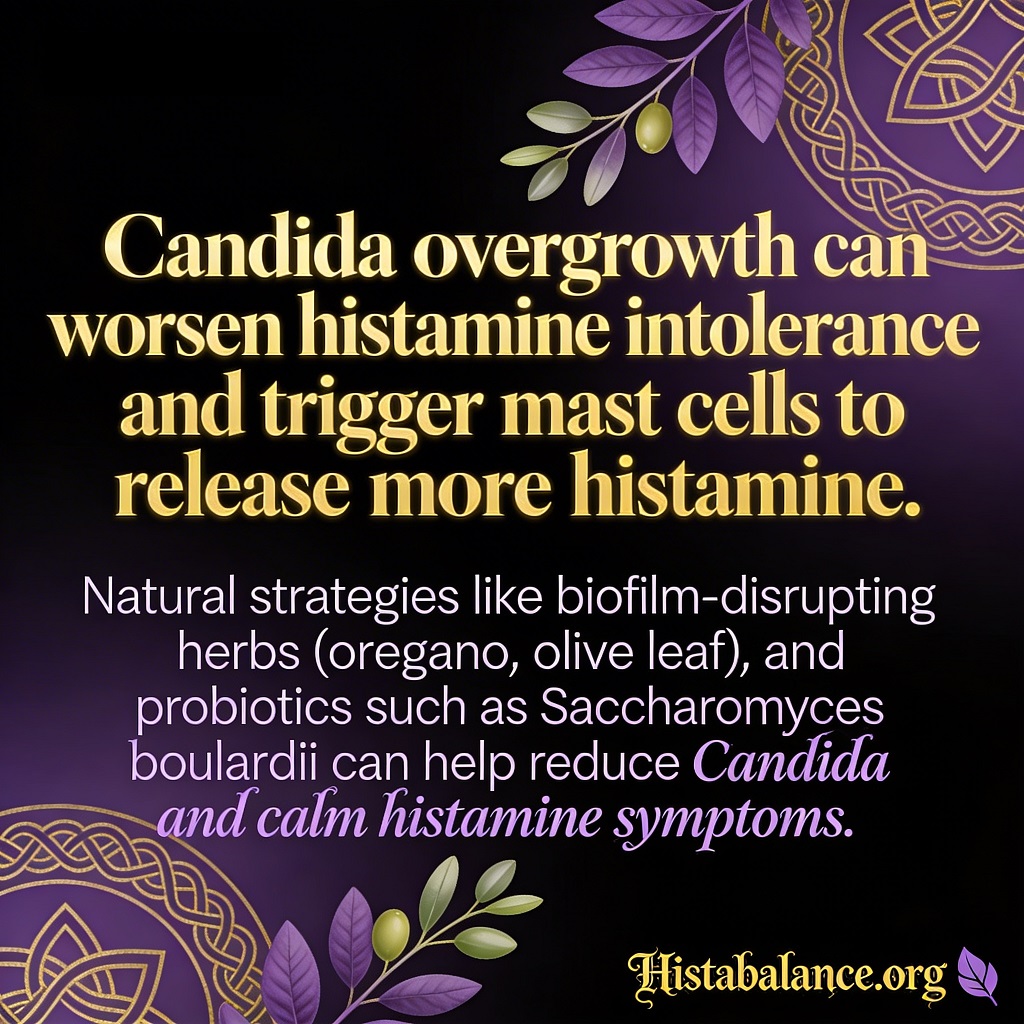
Candida overgrowth, especially Candida albicans, can trigger mast cells to degranulate and release histamine and other inflammatory mediators, which can worsen symptoms of histamine intolerance and mast‑cell activation syndrome (MCAS). At the same time, Candida can damage the gut lining, increase intestinal permeability (“leaky gut”), and promote food sensitivities, all of which raise the body’s overall histamine load.
Studies also suggest Candida may interfere with diamine oxidase (DAO), the main enzyme responsible for breaking down histamine in the gut, making it harder to clear dietary and endogenous histamine. In addition, Candida can produce inflammatory compounds and toxins such as gliotoxins and oxalates, which drive further inflammation and immune activation, feeding into the vicious cycle of histamine‑related symptoms.
This post may contain affiliate links, which means we may receive a commission, at no cost to you, if you make a purchase through a link. Please see our full disclosure for further information.
The best treatment for Candida;
(I wont lie, its gonna be tough;-) 💜
1. Follow a very strict diet
The utmost important thing to beat the candida is a very strict diet. Aim for zero sugar and zero simple carbohydrates, as Candida thrives on glucose and refined starches. Reducing these foods can suppress Candida growth and lower the inflammatory and histamine‑driven load in the body.
2. Keep affected areas dry and breathable
Keep the affected areas dry and breathable; Candida thrives in sweat and moisture‑rich environments such as skin folds and between toes. Wearing loose, natural‑fibre clothing and promptly changing out of wet clothes can speed up the healing. You may want to use anti chafing cream, (Amazon) free from most common irritants.
3. Strengthen your immunity
Strengthen your immunity with supportive nutrients such as vitamin C (from lemon or ascorbic acid if citrus is tolerated), a high‑dose zinc supplement, and adequate vitamin D, all of which regulate immune function. Avoid fruit. Check your iron levels, blood sugar, thyroid panel.
Don’t forget quality sleep and stress management, because both can activate mast cells and increase histamine release, making both Candida and histamine symptoms worse.
4. Use natural antimicrobials and biofilm disruptors
Natural treatment supplements for Candida such as pure oregano oil (Amazon) can help kill Candida while olive leaf extract (Amazon), (or olive oil if Oxalates are issue) may disturb the biofilm, the protective layer Candida creates around itself, which is often a key reason antifungal medications fail. By targeting both the fungus and its biofilm, you may achieve better reduction of Candida.
5. Restore gut balance with probiotics
When things improve, add histamine friendly probiotics such as Saccharomyces boulardii (Amazon) which has been shown to effectively reduce fungal overgrowth, lowering inflammation.
References
- EDS Clinic. 2024. Candida and Mast Cell Activation. EDS Clinic. Available at: https://www.eds.clinic/articles/candida-mast-cell-activation
- Byron Herbalist. 2025. Candida, Mast Cells & Histamine Intolerance. Byron Herbalist. Available at: https://www.byronherbalist.com.au/fungal-infections-mould/candida-histamine-intolerance/
- Histaminikus. 2025. Candida, cause of histamine intolerance. Histaminikus. Available at: https://histaminikus.de/en/blogs/blog/candida-cause-of-histamine-intolerance
- Happy Without Histamine. 2022. Can candida be making it worse? Happy Without Histamine. Available at: https://www.happywithouthistamine.com/candida-and-histamine-intolerance/
- The Functional Gut Clinic. 2025. All About Candida. The Functional Gut Clinic. Available at: https://thefunctionalgutclinic.com/post/all-about-candida
- OvercomingCandida. 2024. The Connection between Candida and MCAS / Histamine Intolerance. Overcoming Candida. Available at: https://overcomingcandida.com/the-connection-between-candida-and-mcas-histamine-intolerance/
- ImuPro. 2025. Candida, histamine intolerance and the gut microbiome. ImuPro. Available at: https://imupro.com.au/news/candida-histamine-intolerance-and-the-gut-microbiome/
- Dr. Becky Campbell. 2025. Candida And SIFO. Available at: https://drbeckycampbell.com/histamine-intolerance-and-gut-health/
- Samonis, G., Falagas, M.E., Lionakis, S., Ntaoukakis, M., Kofteridis, D.P., Ntalas, I. and Maraki, S. (2011) Saccharomyces boulardii and Candida albicans experimental colonization of the murine gut. Medical Mycology, 49(4), pp. 395–399. doi: 10.3109/13693786.2010.533203. Available at: https://pubmed.ncbi.nlm.nih.gov/21077734/
Remember: This is not medical advice. Work with a practitioner familiar with HIT/MCAS/Hormones if possible, especially if you’re on other medications or have complex health issues. Full disclosure.

Leave a Reply