
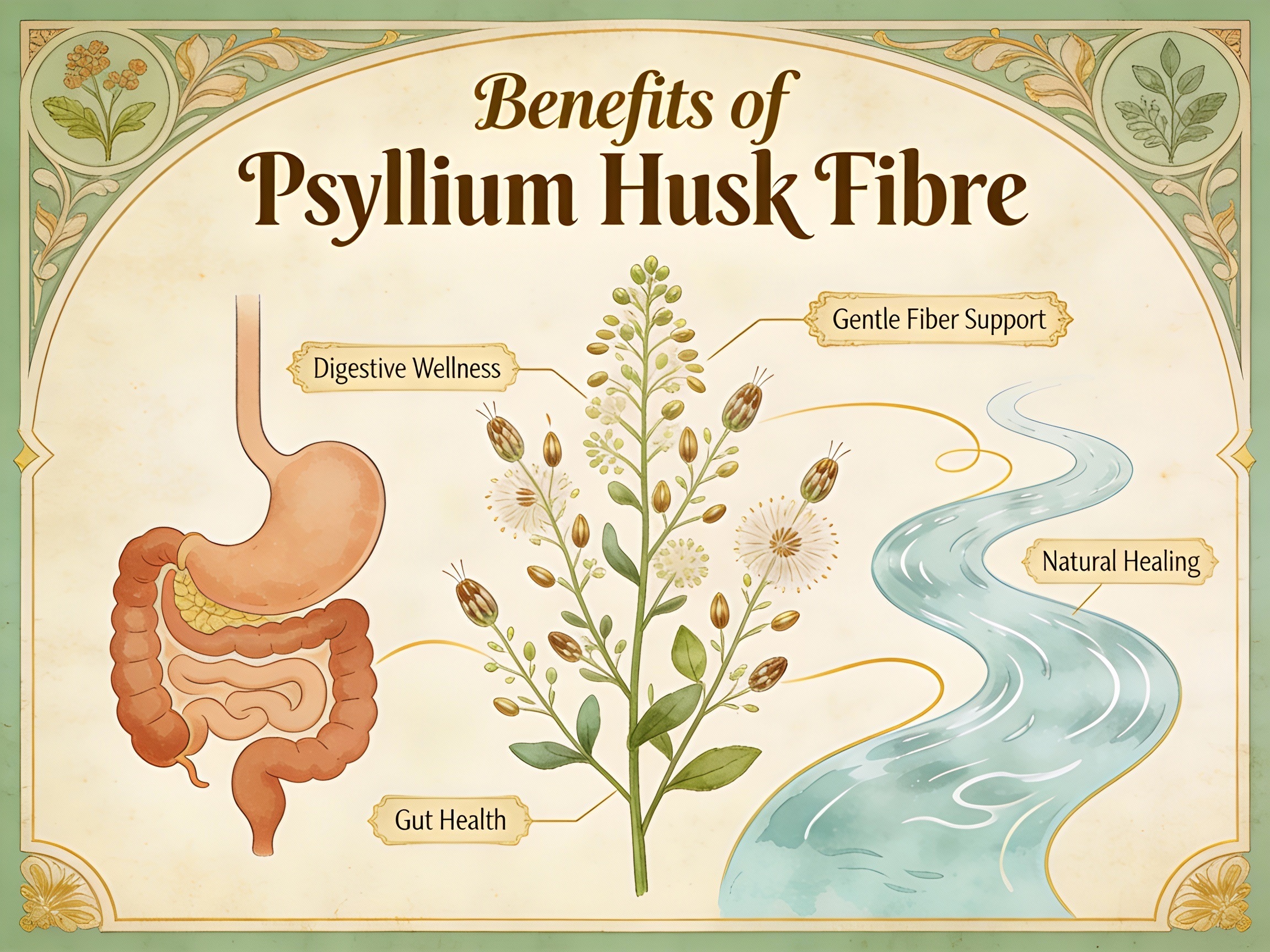
I’ve been finding psyllium husk fibre very helpful for managing my histamine and food intolerance symptoms, particularly because it slows down the absorption of food. Its great for digestion, and especially noticeable if you suffer with IBS like so many of us do. What’s also valuable is how psyllium husk works to bind mycotoxins if you live in damp / mouldy house, and other food intolerances like Sulfur, acting as a gentle protector barrier for your digestive tract. Beyond my personal experience, the science research is clear: Psyllium husk promotes healthy digestion and has strong prebiotic effects, which means it feeds the beneficial bacteria in your gut.

This humble fibre is super multi-functional. It alleviates allergies and histamine intolerance symptoms, reduces acne and atopic conditions, and creates better balance in your gut microflora, which is essential when you’re dealing with conditions like SIBO, IBS, and inflammatory bowel issues. Psyllium husk improves insulin function and blood sugar levels, revitalises intestinal tissue, and increases protection against heart and vascular disease while lowering cholesterol—making it valuable for long-term cardiovascular health. For those of us dealing with fatigue and sleep issues (incredibly common with histamine intolerance and hormonal imbalance), psyllium’s ability to alleviate fatigue and depression while improving sleep is genuinely life-changing. Its anti-inflammatory effects work quietly in the background, suppressing reflux, improving intestinal barrier function, and enhancing the cooperation between your microbiota and intestine. Practically speaking, if you’re struggling with bloating, flatulence, constipation, or diarrhoea—all symptoms that compound histamine intolerance—psyllium husk addresses these systematically by improving peristalsis (intestinal motility) and promoting cell health throughout your digestive tract.
**** Jalanka, J. et al. (2019). The Effect of Psyllium Husk on Intestinal Microbiota in Constipated and Healthy Subjects – PMC/NIH: Demonstrates increases in butyrate-producing bacteria (Lachnospira, Faecalibacterium) and improved SCFA production
**** Gunn, D. et al. (2021). Psyllium reduces inulin-induced colonic gas production in IBS patients – British Medical Journal: Clinical trial showing psyllium reduces bloating and flatulence (p=0.01)
**** HealthPath (2025). Psyllium Husk: The Forgotten Gut Supplement – Reviews microbiota changes and butyrate production
**** Kassa, M.G. et al. (2024). Review on psyllium husk: nutritional, functional, health benefits – Comprehensive review in Taylor & Francis Online: Covers digestion, cholesterol, blood sugar, and microbiome benefits
**** Przybyszewska, J. et al. (2024). The role and therapeutic effectiveness of Plantago ovata – PMC: Documents 82% symptom relief rate in IBS patients at 10g/day dosage
**** Anderson, J.W. et al. (1988). Cholesterol-Lowering Effects of Psyllium Hydrophilic Mucilloid – JAMA/Archives of Internal Medicine: 8-week study showing total cholesterol reduced 14.8%, LDL cholesterol reduced 20.2%
**** Lu, W. et al. (2025). Effects of dietary fiber on the composition, function, and implications of the microbiota – Frontiers in Microbiology: Shows psyllium promotes butyrate-producing bacteria and fortifies intestinal barrier by reducing pro-inflammatory cytokines
**** Wang, Z. et al. (2025). Psyllium husk powder enhances the management of type 2 diabetes – Demonstrates significant hypoglycemic activity and improved SCFA production
**** Meta-analysis (2000). Cholesterol-lowering effects of psyllium intake adjunctive to diet therapy – American Journal of Clinical Nutrition: 10.2g psyllium daily lowered total cholesterol 4%, LDL cholesterol 7% vs placebo (p<0.0001)
**** Li, X. et al. (2025). Psyllium Husk Powder improves constipation by remodelling gut microbiota – Recent 2025 research showing improved intestinal motility, SCFA levels, and intestinal barrier repair

Leave a Reply