
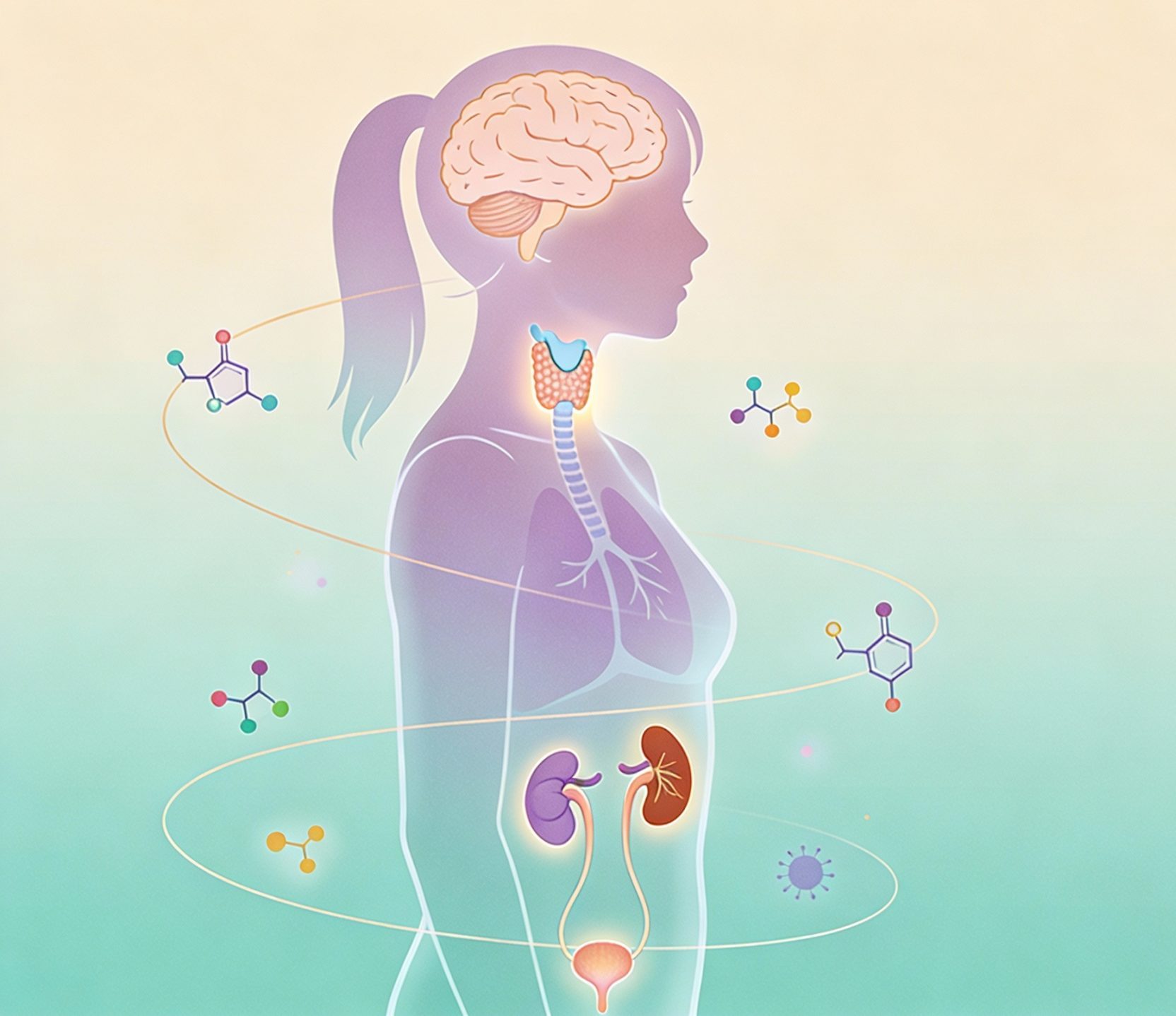
Many studies have shown that the hormone estrogen, especially its form estradiol, triggers the activation of mast cells (mast cells are immune system cells that release histamine when needed and are found in the gastrointestinal tract, skin, respiratory system, uterus and ovaries). Estrogen not only influences the release of histamine from mast cells, but also weakens the activity of the DAO enzyme, which breaks down histamine and other biogenic amines.
Histamine also stimulates the ovaries to produce more estrogen.
This creates a vicious circle: estrogen promotes the release of histamine, and histamine in turn drives the production of estrogen.
If a woman eats foods high in histamine every day, her hormones can quickly end up on a rollercoaster because of rising estrogen levels. Sensitivity to histamine also increases when taking estrogen replacement medication, and this treatment can even trigger histamine intolerance in some women.
HISTAMINE AND PROGESTERONE
Progesterone is another important female hormone. Progesterone helps maintain hormonal balance and blocks the release of histamine from mast cells. If there is too little progesterone, estrogen levels rise and symptoms of histamine toxicity can appear.
HISTAMINE AND PERIOD
Many women report that their histamine intolerance symptoms worsen before and during their period. Before menstruation and while it is happening, the body increases histamine levels and reduces production of the DAO enzyme. At the same time, the muscles of the uterus in the lower abdomen contract, which can lead to abdominal cramps.
HISTAMINE AND PREGNANCY
During pregnancy, women usually do not experience symptoms of histamine intolerance. It is thought that histamine may be important for the development of the embryo because it has growth‑supporting properties, although this idea has not yet been fully confirmed. During pregnancy, the body ensures that baseline histamine levels drop significantly in order to protect the unborn baby. The absence of histamine intolerance symptoms in pregnancy is also attributed to the fact that the placenta increases DAO production (from around the third month) by about 500‑fold. This higher DAO level helps protect the fetus from histamine toxicity, and it also helps reduce the risk of premature labour and miscarriage. After birth, histamine intolerance symptoms can return because DAO activity goes back to “normal” (as it was before pregnancy).
HISTAMINE AND MENOPAUSE
Hormonal balance fluctuates during menopause. This can quickly lead to estrogen dominance because progesterone levels are lower than estrogen levels. As a woman gets older, she produces less estrogen overall, but progesterone levels drop much faster than estrogen. This leads to estrogen dominance and symptoms linked to an excessive amount of histamine being released.
REFERENCES:
https://pubmed.ncbi.nlm.nih.gov/17166400
https://pmc.ncbi.nlm.nih.gov/articles/PMC10712814
https://pmc.ncbi.nlm.nih.gov/articles/PMC4417946
https://pathwaymap.com/pregnancy-and-histamines
https://pmc.ncbi.nlm.nih.gov/articles/PMC12249752
https://www.larabriden.com/the-curious-link-between-estrogen-and-histamine-intolerance


Leave a Reply