
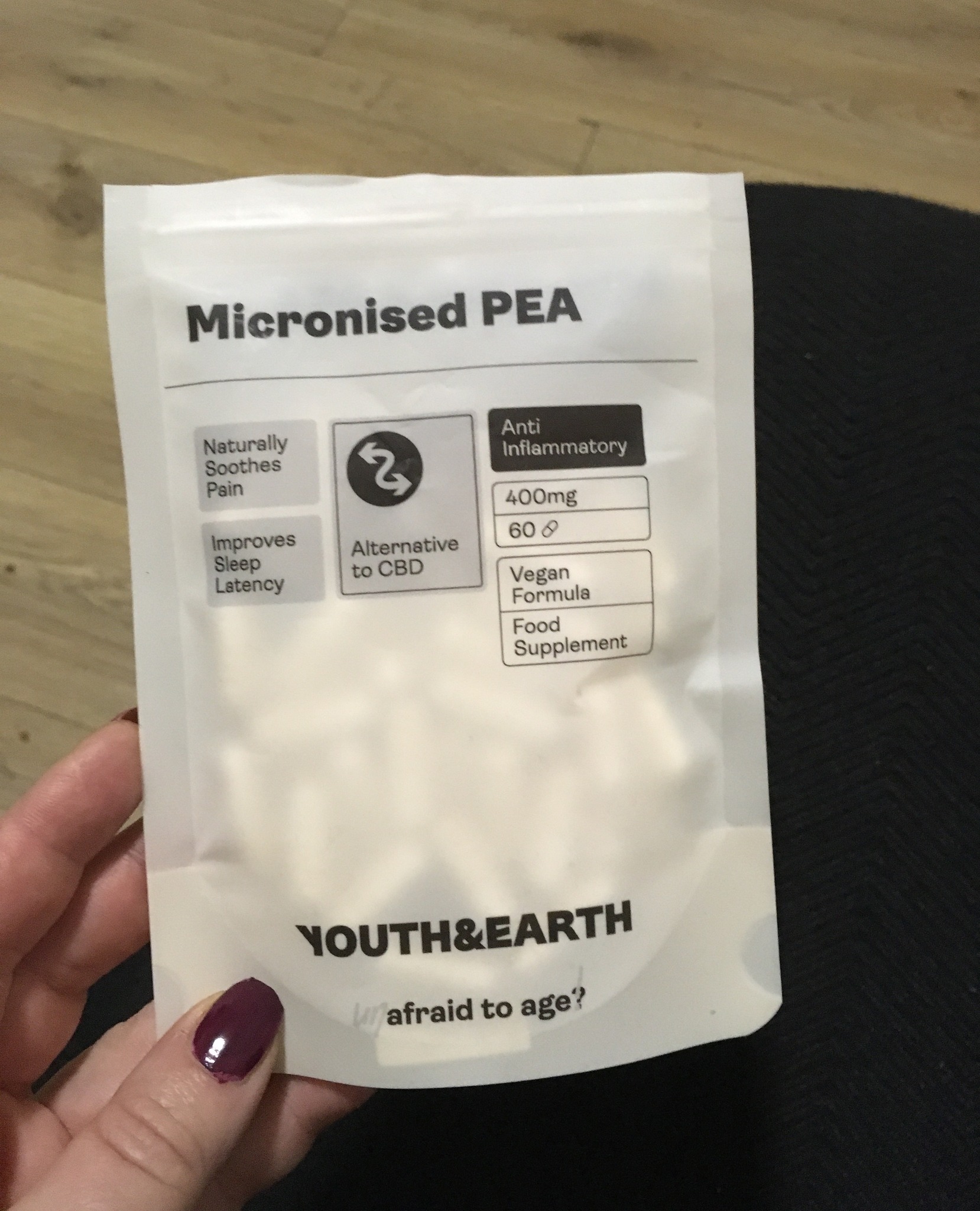
PEA, an anti-inflammatory supplement, is often highly recommended by HIT/MCAS sufferers. I decided to dig deeper and tried it myself to see if the hype matched reality. Here’s what I found about about them. Lets talk how PEA might help manage high histamine and MCAS symptoms and about my experience with PEA.
This post may contain affiliate links, which means we may receive a commission, at no cost to you, if you make a purchase through a link. Please see our full disclosure for further information.
What Is PEA?
Palmitoylethanolamide (PEA) get it here (Amazon) is an endocannabinoid-like lipid mediator—essentially a naturally produced compound in your body that acts like a chemical messenger with extensively documented anti-inflammatory, analgesic, antimicrobial, immunomodulatory and neuroprotective effects. It is well tolerated in animals and humans, which makes it an attractive option for those with reactive or sensitive systems like MCAS.
PEA works on multiple molecular targets in your body, which is what makes it unique. Its primary action involves activating PPAR-α receptors, but it also modulates the endocannabinoid system and inhibits mast cell degranulation—the exact mechanism of action that matters most to MCAS sufferers. In plain language, this means PEA actively prevents mast cells from releasing histamine and inflammatory mediators, which is what goes wrong in MCAS and high histamine conditions.
The Science: How PEA Manages Allergic Events and Histamine
A study from researchers at the Department of Pharmacy, University of Naples Federico II, found compelling evidence for PEA’s role in managing allergies and histamine. Led by Maria Maisto, the researchers created a nutraceutical formulation combining melatonin and palmitoylethanolamide (PEA) and tested it on human mast cells. Their findings: the combination of PEA and melatonin could exhibit anti-allergic activity, acting in both the early and late phases of immune events.
PEA’s actions extend to reducing the very mediators that cause MCAS flares: histamine, proteases, and inflammatory cytokines like TNF-α and IL-6. This is why so many people in MCAS communities report real symptom relief.
Why People with MCAS Recommend PEA
In MCAS and histamine intolerance communities on Reddit and other social media, PEA comes up again and again. People report:
- Reduced inflammation and symptom flares
- Better pain control, especially for joint or nerve pain often associated with MCAS
- Improved sleep quality and reduced early morning waking (which is very common in MCAS due to histamine circadian rhythm peaks)
- Fewer allergic reactions and better tolerance to triggers
- Improved mood and sense of calmness
My Personal Experience with PEA
When I took a small dose for the first time, I felt a sense of calmness, relaxation and being a bit high. Then couple minutes later i felt drowsy with urge to sleep. I learnt why it’s recommended to take it before bedtime or after exercise. Since then, I’ve used it primarily for better sleep. After a few days of use, I definitely noticed my inflammation levels are lower with much less symptoms of high histamine—fewer flares, less itching, and can tolerate more food. It is not a miracle, but so far, I haven’t noticed any side effects at all , the drowsiness has gone. I take PEA when i eat high histamine food and need to lower inflammation and to feel fresh the next day.
I stress the importance of starting low to avoid digestive discomfort.
General dosing guidelines:
- For beginners and sensitive people: Start with 200–400 mg per day.
- Standard therapeutic dose: 300–600 mg twice daily, or 300–1200 mg total per day.
- Higher therapeutic dose: Up to 1200 mg twice daily for chronic conditions, though this takes longer to reach benefit and can be reserved for after you establish tolerance.
The research suggests that optimal doses are in the 300–600 mg range, with effectiveness declining if you exceed 1200 mg daily. Most people in MCAS communities report best results with 600 mg twice daily (1200 mg total), though some do well on less.
Remember: This is not medical advice. Work with a practitioner familiar with HIT/MCAS/Hormones if possible, especially if you’re on other medications or have complex health issues. Full disclosure.
References and Further Reading
Kennedy, J. (2024). “The Potential of PEA in Reducing Histamine Levels.” Available: https://joannekennedynaturopathy.com/the-remarkable-potential-of-palmitoylethanolamide-pea-in-reducing-histamine-levels/
Maria Maisto et al. (2024). “Nutraceutical formulation based on a synergic combination of melatonin and palmitoylethanolamide for the management of allergic events.” Frontiers in Nutrition. Available: https://www.frontiersin.org/journals/nutrition/articles/10.3389/fnut.2024.1417747/full
University of Naples Federico II. (2024). “Fixed combination of palmitoylethanolamide and melatonin in migraine prevention.” PMC – NIH. Available: https://pmc.ncbi.nlm.nih.gov/articles/PMC12018232/
Clayton, P., Hill, M., et al. (2021). “Palmitoylethanolamide: A Natural Compound for Health Management.” International Journal of Molecular Sciences. Available: https://pmc.ncbi.nlm.nih.gov/articles/PMC8157570/
Galla, R. et al. (2024). “Palmitoylethanolamide as a Supplement.” PubMed Central – NIH. Available: https://pmc.ncbi.nlm.nih.gov/articles/PMC11354262/
Genetic Life Hacks. (2025). “Histamine, Mast Cell Activation, and Early Morning Insomnia.” Available: https://www.geneticlifehacks.com/histamine-early-morning-insomnia/

Leave a Reply