
Why This Combination Matters for MCAS, Histamine Intolerance, and Perimenopause
Everyone is talking about Magnesium, but what if there is something more powerful that can help ease your symptoms?: magnesium and vitamin C work best when taken together. In my case it’s Mixing Magnesium Malate powder with Ascorbic Acid. The inflammation dropped noticeably, recovery from exercise faster and my energy improved. What also surprised me was how much better my hormones seemed to stabilize.
The science backs up my experience. Magnesium and vitamin C enhance each other’s effectiveness. When vitamin C enters your system, it reduces inflammation in your gut lining, which makes your magnesium absorb better. Meanwhile, magnesium activates vitamin C’s transport into your cells more efficiently, meaning more of the vitamin C you take actually gets used by your body instead of passing through unused. For anyone with MCAS, high histamine, hormone imbalances, or PMDD, this combination targets the root problems in multiple ways simultaneously.
This post may contain affiliate links, which means we may receive a commission, at no cost to you, if you make a purchase through a link. Please see our full disclosure for further information.
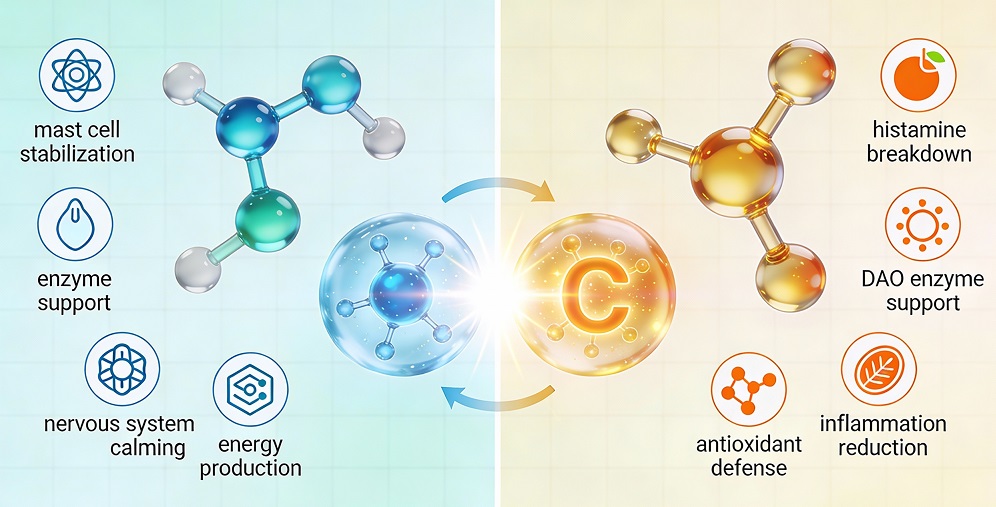
How Ascorbic Acid (Vitamin C) Reduces Histamine
Ascorbic acid is one of the most tolerated and helpful natural tools for lowering histamine levels, and the mechanism is straightforward: vitamin C directly breaks down histamine in your bloodstream.
Why Acidity Helps
The acidity of vitamin C is actually why it works. Histamine is an alkaline molecule, and acidic environments naturally reduce histamine levels. This is also why some people with histamine intolerance benefit from low-pH foods. Vitamin C also reduces mast cell degranulation—meaning it prevents mast cells from releasing histamine and inflammatory mediators in the first place.
Magnesium Malate: The PMDD, Perimenopause, and Energy Connection
Magnesium malate is one of the most underrated supplements for women struggling with hormones, PMDD, and perimenopause—especially when combined with histamine issues. Studies show women with PMS have significantly lower blood magnesium levels than those without PMS. During perimenopause, as estrogen fluctuates wildly and progesterone drops, your ability to retain and utilize magnesium decreases. For hormonal health specifically helps with: Reduces anxiety Supports mood regulation by enhancing serotonin signaling (magnesium improves how your brain’s serotonin receptors work), which is helpful for histamine flare up when serotonin is low. Alleviates menstrual headaches and migraines . Relaxes painful muscle cramps during menstruation. Reduces sugar cravings and stabilizes blood sugar (critical during hormone transitions). Reduces hot flashes and night sweats. Supports long-term bone health as estrogen declines during menopause
Magnesium Malate Specifically for Energy and Muscle Function
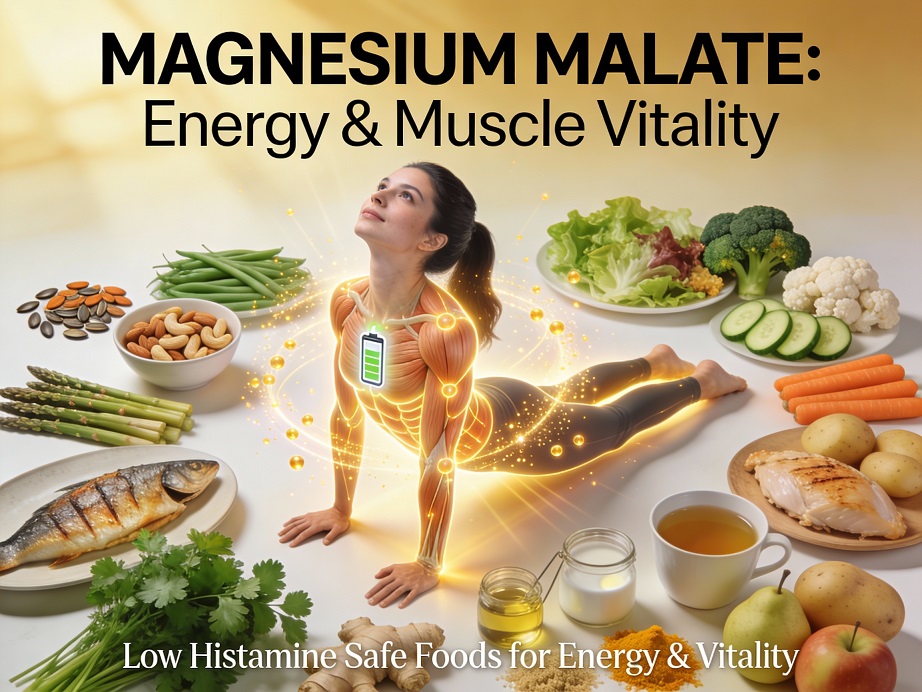
Magnesium malate is the form used by your body to produce energy in your cells through ATP production (your cellular battery). This is why it’s particularly helpful if you have CFS, ME, or just feel chronically exhausted during perimenopause.
Magnesium Depleters: High histamine environments (chronic flares deplete magnesium) High-dose calcium supplementation (competes for absorption), Alcohol consumption, Sugar and refined carbohydrates, Certain medications (proton pump inhibitors, antibiotics), High caffeine intake, Diarrhea and gut malabsorption (common in MCAS), CHronic stress.
Dosing:
Specifically Magnesium Malate:
- Starting dose: 100-200mg daily
- Therapeutic dose: 300-600mg daily (split into doses, typically in evening)
- Best taken: With food, in evening (supports sleep) or with Vitamin C taken in morning to kick start your day.
- Get a powder form here ( Amazon)
- Daily maintenance: 200-400mg in divided doses (ideally in evening)
- Best forms: Magnesium glycinate, magnesium malate, or magnesium threonate
- Avoid for MCAS: Magnesium citrate (can have high histamine potential), magnesium oxide (can trigger diarrhea and GI upset)
For POTS (which often accompanies MCAS):
- Magnesium: 200-400mg daily
- Electrolyte protocol: Combined with sodium (Amazon), (3-10g daily), potassium, and hydration
- Take every 2-3 hours during acute flares
- Split daily doses (morning, midday, evening)
- Take with food if you have GI sensitivity
- Ascorbic acid is rapid-acting but also rapidly excreted, so frequency matters more than total daily dose.
- Get a powder form here ( Amazon)
Remember: This is not medical advice. Work with a practitioner familiar with HIT/MCAS/Hormones if possible, especially if you’re on other medications or have complex health issues. Full disclosure.
References
- Intravenous Ascorbic Acid Decreases Serum Histamine – Naunyn Schmiedebergs Archives of Pharmacology, 2013
- Histamine and Ascorbic Acid in Human Blood – Study showing 1g daily vitamin C reduced histamine in all participants
- Magnesium and Vitamin C Synergy – Enhanced absorption and immune benefits
- Low Histamine Vitamin C for MCAS – Mast Cell 360 guide
- The Best Magnesium for MCAS – Comprehensive magnesium guide
- The Power of Magnesium in Perimenopause – Lara Briden, women’s health expert
- Magnesium, PMS & Menopause – Research on magnesium + B6 for PMDD
- The Vicious Circle Between Stress and Magnesium – Magnesium depletion cycle
- Reddit MCAS Community Experience: Vitamin C Lowered My Histamine | Vitamin C Experience

Leave a Reply