
Low-Histamine Diet: Foods, Meal Plans and Recipes
When the body cannot properly metabolize histamine, it leads to various health problems such as headaches, rashes, digestive issues, or even breathing problems. An important part of treating histamine intolerance is a low-histamine diet. What does it look like, which foods can you eat on it, and which ones need to be eliminated?
What is Histamine Intolerance?
Histamine intolerance is a disorder in which the body is unable to properly break down histamine. Histamine is a biogenic amine that naturally occurs in many foods and is also released in the body during immune reactions, such as during allergies.
Most people have enough enzymes that break down histamine in the body. However, people with histamine intolerance have reduced activity of the diamine oxidase (DAO) enzyme, which breaks down histamine. The consequence is histamine accumulation in the body and resulting health problems.
Symptoms of Histamine Intolerance:
- Headaches or migraines
- Skin rashes or hives
- Constipation or diarrhea
- Digestive problems (abdominal pain, bloating, gas)
- Swelling
- Breathing problems or asthmatic symptoms
- Chronic fatigue
- Low blood pressure
- Heart palpitations and rapid heartbeat
- Dizziness
If you suspect histamine intolerance, visit your doctor for a proper diagnosis.
How Does a Low-Histamine Diet Work?
The low-histamine diet is a specific eating plan aimed at minimizing the intake of foods that contain high levels of histamine or promote its release in the body.
The low-histamine diet helps people with histamine intolerance reduce their symptoms, so it is an integral part of treating histamine intolerance. The low-histamine diet is essentially a therapeutic diet, not a weight-loss diet.
Main Principles of the Low-Histamine Diet
Limiting foods high in histamine: Some foods naturally have high histamine content, which can increase further with improper storage or fermentation. These include ripening cheeses, cured meats, alcohol, fermented foods (such as sauerkraut), smoked and canned fish, wine, and vinegar.
Limiting foods that promote histamine release: Some foods can trigger histamine release in the body, even if they contain only small amounts of this amine. These include tomatoes, citrus fruits, chocolate, or certain types of nuts.
Choosing fresh foods: It is recommended to eat as much fresh and minimally processed food as possible, which has low histamine content. These include fresh meat, fish, vegetables, and fruit.
Tracking body reactions: It’s a good idea to keep a food diary where you record what you’ve eaten and how your body reacts to it. This will help you identify which foods might cause problems for you.
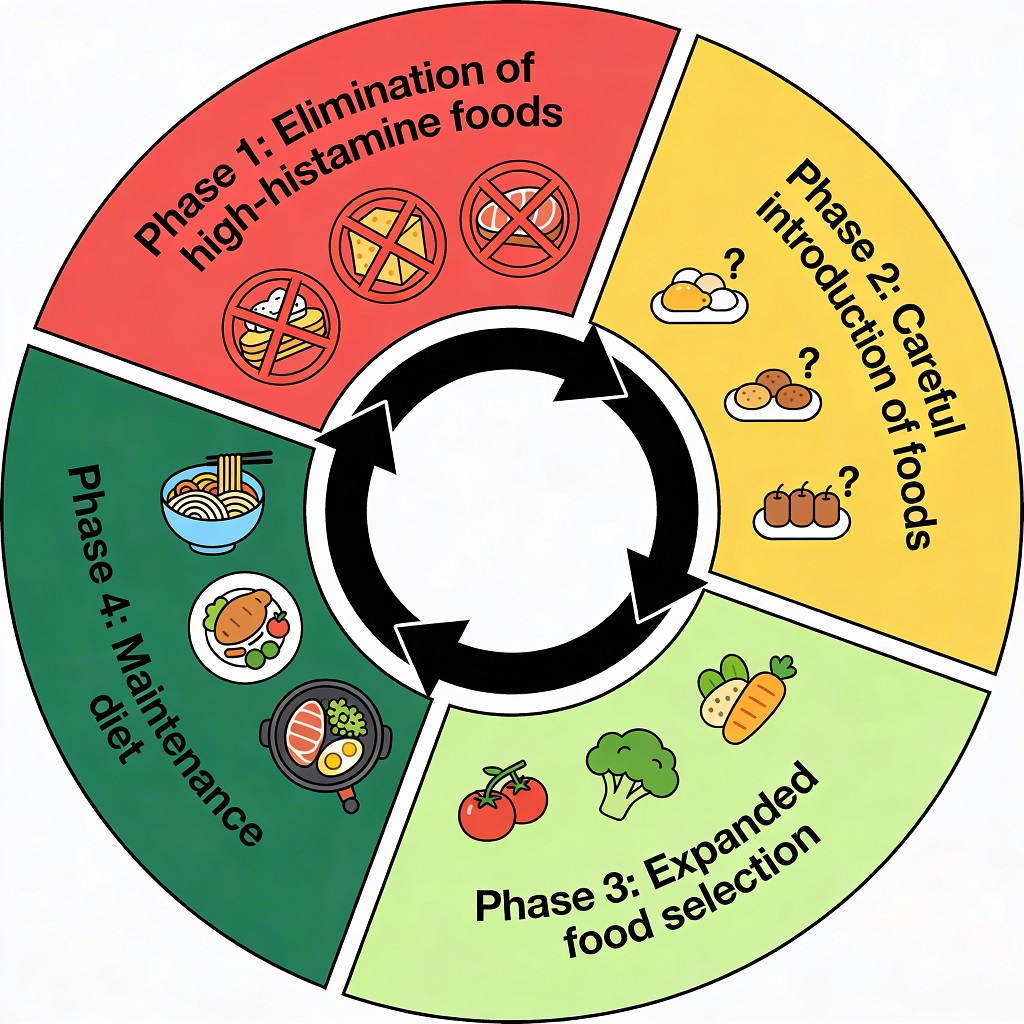
Gradual introduction of foods: The low-histamine diet is usually divided into several phases. In the first phase, it is recommended to completely eliminate foods considered problematic. Once symptoms improve, you can gradually reintroduce some foods into your diet. This allows you to discover which specific foods don’t work for you. It’s important to introduce new foods one at a time and monitor how your body reacts to them.
Which Foods to Eat (and Not Eat) on a Low-Histamine Diet?
A simple helper for histamine intolerance is the Swiss Food List. The Swiss List helps people on a low-histamine diet understand which foods are suitable and which are not.
This list was created by Swiss experts and provides an overview of foods that have low histamine content or don’t contain histamine at all. It also includes a list of forbidden foods that contain a lot of histamine or can cause its release in the body.
Low-Histamine Diet – Foods to Avoid
There are several foods that should be limited or completely eliminated from the diet when managing histamine intolerance. The most problematic foods include:
a) Foods High in Histamine
Fermented Foods:
- Ripening cheeses (e.g., parmesan, gouda, camembert)
- Cured meats (sausages, salamis)
- Dried or aged meat (such as dried ham)
- Sauerkraut
- Soy sauce
- Miso paste
- Yeast in any form (e.g., yeast spread)
- Leavened baked goods
Alcohol:
- Wine (especially red)
- Beer
- Champagne
Fish:
- Mackerel, sardines, tuna, herring – contain high histamine, especially if not properly stored
- Seafood – shrimp, crab, lobster
- Fermented and smoked fish
- Anchovies
Preserved Foods:
- Canned fish, meat, or vegetables can contain high histamine levels due to fermentation during preservation
Certain Fruits and Vegetables:
- Overripe bananas
- Pineapple
- Eggplant
b) Foods That Release Histamine
Citrus Fruits:
- Oranges
- Lemons
- Grapefruits
- Limes
Certain Vegetables:
- Fresh tomatoes
- Tomato products (ketchup or tomato passata)
- Onions
- Garlic
- Asparagus
Certain Fruits:
- Raspberries
- Strawberries
- Kiwi
- Cherries and sour cherries
Dark Chocolate
Nuts:
- Walnuts
- Almonds
- Peanuts
Beverages:
- Coffee
- Green and black tea
- Energy drinks
- Flavored lemonades
- Acidic drinks
It’s important to realize that each individual can have different sensitivity to certain foods. For this reason, it’s necessary to monitor your own body’s reactions to specific foods.
Low-Histamine Diet – Foods to Include
Although the low-histamine diet restricts many foods, there are also plenty of safe and suitable options. Foods with low histamine content include:
1. Fresh Meat and Fish
Fresh Meat (poultry, beef, pork) – fresh, non-fermented and non-aged meat
Fresh Fish (such as salmon, trout, cod, tilapia, pike) – important that the fish is fresh and not stored for long periods
2. Fruit
- Apples
- Pears
- Melons
- Bananas (not overripe)
- Peaches
- Plums
- Blueberries
- Nectarines
- Mango
- Papaya
- Currants
3. Vegetables
- Carrots
- Broccoli
- Zucchini
- Spinach (cooked)
- Cucumber
- Potatoes
- Sweet potatoes
- Cauliflower
- Kohlrabi
- Radishes
- Pumpkin
4. Dairy Products
- Fresh milk
- Fresh cottage cheese and yogurt (freshly made, not aging)
5. Grains and Bread
- Rice
- Quinoa
- Buckwheat
- Couscous
- Millet
- Whole wheat pasta
- Whole grain and rye bread (without yeast)
6. Legumes
- Lentils, beans, or peas (with caution, some may cause digestive issues)
7. Herbs and Spices
- Fresh herbs (such as basil, parsley, thyme, rosemary)
- Turmeric
- Ginger
Benefits of a Low-Histamine Diet
The low-histamine diet is designed exclusively for people with histamine intolerance, so you can expect it to provide primarily relief from symptoms.
What We See as Positive About the Low-Histamine Diet
- Emphasis on fresh foods
- Elimination of industrially processed foods, refined carbohydrates, and sugars
- Higher intake of quality proteins and healthy fats
- Increased awareness of diet composition
- Elimination of alcohol
Drawbacks and Risks of the Low-Histamine Diet
Following a low-histamine diet also has its pitfalls. After all, it is an elimination diet that excludes many healthy foods from the diet. If not necessary, the low-histamine diet should not be followed long-term. To avoid possible risks, it’s important to gradually and carefully reintroduce some foods back into your diet.
What We Don’t Like as Much About the Low-Histamine Diet
Limited Food Selection. The low-histamine diet requires eliminating many foods such as ripening cheeses, cured meats, wine, or fermented products, which can be a major limitation for many people.
Risk of Nutritional Deficiencies, such as vitamin B12, vitamin D, or calcium.
More Complex Food Preparation. With the low-histamine diet, you need to carefully select and prepare meals. This can require more time for shopping, preparation, and cooking than standard eating.
Difficult to Eat Away from Home. Following a low-histamine diet is very problematic if you eat in restaurants or in public, as many foods contain hidden ingredients that can be high in histamine.
Sample Meal Plan for Histamine Intolerance
Breakfast: Oatmeal with almond milk and fresh fruit
Snack: Fresh vegetables with hummus
Lunch: Grilled chicken breast with quinoa and steamed vegetables (broccoli, zucchini, carrots)
Snack: White yogurt (not aging) with fruit and pistachios
Dinner: Baked cod with sweet potatoes and steamed spinach
Recipes for Histamine Intolerance
When managing histamine intolerance, it’s important to choose foods that don’t contain high levels of histamine and are at the same time delicious and nutritious. The following recipes can help you create a meal plan that meets your needs while avoiding uncomfortable symptoms associated with excess histamine.
These recipes are suitable for people with histamine intolerance and offer a varied and healthy way to enjoy meals without worrying about histamine-related symptoms. It’s always important to pay attention to the freshness of foods and avoid foods that might cause you problems.
Herbed Chicken Breast with Rice
Ingredients:
- 2 chicken breasts
- 1 cup rice
- 1 tablespoon olive oil
- 1 clove garlic
- 1 teaspoon dried basil
- 1 teaspoon dried thyme
- Salt and pepper to taste
Instructions:
- Cook rice according to package directions
- Heat olive oil in a pan and lightly sauté minced garlic
- Add chicken breasts and fry them on both sides until golden
- Season with herbs, salt and pepper
- Serve chicken with cooked rice and fresh vegetables according to tolerance
Vegetable Soup with Carrots and Potatoes
Ingredients:
- 3 medium potatoes
- 2 carrots
- 1 zucchini
- 1 tablespoon olive oil
- 1 onion
- Salt, pepper, fresh parsley, ground cumin, ground sweet paprika
Instructions:
- Clean vegetables and cut them into small pieces
- Heat olive oil in a pot and lightly sauté onion
- Add potatoes, carrots, and zucchini
- Cover with water, add spices, salt and pepper
- Cook for about 20 minutes until vegetables are soft
- Sprinkle with fresh parsley before serving
Baked Trout with Lemon and Herbs
Ingredients:
- 2 trout fillets
- 1 lemon
- 2 tablespoons olive oil
- 1 tablespoon fresh thyme
- Salt and pepper
- Potatoes (or other favorite side)
Instructions:
- Clean trout and place on a baking sheet lined with parchment paper
- Sprinkle with fresh thyme, salt and pepper
- Drizzle with lemon juice and a little olive oil
- Bake in a preheated oven at 180°C for about 25 minutes until cooked
- Serve with boiled potatoes
Rice Noodles with Vegetables and Tofu
Ingredients:
- 200 g rice noodles
- 1 red bell pepper
- 1 zucchini
- 1 carrot
- 1 tablespoon olive oil
- Salt and pepper
- 200 g tofu
Instructions:
- Cook rice noodles according to package directions
- Cut tofu into cubes and lightly fry in a pan with olive oil until golden and crispy
- Cut vegetables into thin strips
- Heat olive oil in a pan and sauté vegetables
- Add cooked noodles, tofu, salt and pepper
- Toss briefly and serve
Cottage Cheese Dessert with Pears
Ingredients:
- 250 g fresh cottage cheese
- 1 pear
- 1 teaspoon honey
- ½ teaspoon vanilla
Instructions:
- Peel the pear and cut into small pieces
- Mix cottage cheese with honey and vanilla
- Add pear pieces to the cottage cheese mixture
- Serve as a light dessert
Baked Sweet Potatoes with Herbal Cottage Cheese
Ingredients:
- 2 sweet potatoes
- 1 tablespoon olive oil
- 1 teaspoon rosemary
- Salt and pepper
- 250 g fresh cottage cheese
- Fresh chives
- 1 clove garlic
Instructions:
- Peel sweet potatoes and cut into cubes
- Mix with olive oil, rosemary, salt and pepper
- Bake in a preheated oven at 180°C for about 30 minutes until soft
- Serve with cottage cheese mixed with fresh herbs and garlic. Season to taste
Salad with Chicken and Avocado
Ingredients:
- 1 chicken breast
- 1 avocado
- 1 cucumber
- 1 red bell pepper
- Salt, pepper, lemon juice
Instructions:
- Salt and pepper the chicken breast and fry it without fat in a non-stick pan, then cut into thin slices
- Cut avocado, cucumber and pepper into cubes
- Mix all ingredients and drizzle with lemon juice
- Season with salt and pepper and serve
Omelet with Fresh Vegetables
Ingredients:
- 2 eggs
- ½ bell pepper
- ½ zucchini
- 1 teaspoon olive oil
- Salt and pepper
Instructions:
- Cut vegetables into small pieces
- Heat olive oil in a pan and sauté vegetables
- In a bowl, beat eggs, salt and pepper
- Pour eggs onto the pan with vegetables and fry until omelet is cooked
- Serve with whole grain or rye bread without yeast
Beef Steak with Vegetable Puree
Ingredients:
- 200 g beef (lean cut)
- 2 potatoes
- 1 carrot
- ¼ broccoli
- 1 teaspoon olive oil
- Salt and pepper
Instructions:
- Cut beef into steaks
- Season with salt and pepper
- Fry in a pan according to desired doneness
- Cook potatoes, broccoli and carrots until soft and blend into puree
- Serve steak with vegetable puree
Vegetable Frittata
Ingredients:
- 2 eggs
- 1 zucchini
- ¼ broccoli
- ½ red onion
- 1 teaspoon olive oil
- Salt and pepper
Instructions:
- Pre-cook broccoli
- Cut vegetables into small pieces
- Heat olive oil in a pan and sauté vegetables
- Beat eggs, salt and pepper
- Pour eggs over vegetables and fry on medium heat until frittata sets
Pear Crumble with Oatmeal
Ingredients:
- 2 ripe pears
- ½ cup oatmeal
- 2 tablespoons cashew butter
- 1 teaspoon vanilla
- ¼ teaspoon cinnamon
- ½ teaspoon lemon juice
- 1 tablespoon coconut oil
Instructions:
- Peel pears, cut into small pieces and place in a baking dish. Drizzle with lemon juice
- In a bowl, mix oatmeal, cashew butter, vanilla, cinnamon, and coconut oil. Distribute evenly over pears
- Bake in a preheated oven at 180°C for about 20 minutes until a golden crust forms
Smoothie with Raspberries
Ingredients:
- ½ cup fresh raspberries
- 1 banana
- 1 cup white yogurt (not aging)
- Water as needed
Instructions:
- Place all ingredients in a blender
- Blend and serve
Books and Cookbooks About Histamine Intolerance
Want to learn more about histamine intolerance and how to adapt your diet? There are several books and cookbooks on the topic of low-histamine diet:
- HIT: The Complete Guide to Histamine Intolerance (James L. Gibbs)
- The Four-Phase Histamine Reset Program: How to Uncover the Cause of Your Migraines, Eczema, Dizziness, Allergies, and Other Ailments (Dr. Becky Campbell)
- I Bake and Cook with Love Without Gluten and Histamine (Eva Štveráková)
- Food Intolerances and Allergies: How to Manage Them Through Diet (Markéta Křížová)
- We Eat According to Ourselves: Adapting Your Diet for Allergies, Intolerances and Diseases (Veronika Hurdová)
Conclusion: A Low-Histamine Diet Helps Reduce Symptoms
- When following this diet, the focus is on fresh, minimally processed foods and limiting foods that contain large amounts of histamine or promote its release in the body (certain types of fruit, vegetables, processed meat, cheese or alcohol)
- Each person can react differently to different foods, so it’s important to always adapt your diet individually
- Pay attention to the freshness of foods and avoid foods that may cause you problems
REferences;
Maintz, L., & Mayer, E. (2009). Histamine and histamine intolerance. American Journal of Clinical Nutrition, 90(3), 1541S–1546S. https://doi.org/10.3945/ajcn.2009.27401D
Mayer, E. (2017). Swiss Food List for Histamine Intolerance: A Guide to Managing Histamine Intolerance Through Diet. Swiss Journal of Gastroenterology, 21(2), 130–135. https://doi.org/10.1007/s12345-017-0456-4
Sandler, R. S., & Miehlke, S. (2017). Diagnosis and management of histamine intolerance: A review. Clinical Gastroenterology and Hepatology, 15(8), 1162–1170. https://doi.org/10.1016/j.cgh.2017.02.016
Tepper, B. J., & Rennard, S. I. (2003). Histamine intolerance: A review of clinical aspects and food implications. Clinical Reviews in Allergy & Immunology, 24(3), 271–282. https://doi.org/10.1385/CRIAI:24:3:271
Haas, M. L., & Christiansen, M. (2019). The role of histamine in food intolerance. Food Research International, 125, 107–113. https://doi.org/10.1016/j.foodres.2019.01.024
Sperr, W. R., & Kralovec, J. (2005). Histamine intolerance: The role of diet in managing symptoms. Journal of Clinical Immunology, 25(5), 319–323. https://doi.org/10.1007/s10875-005-4007-9
De Punder, K., & De Vries, S. (2017). Dietary management of histamine intolerance: A review. Nutrients, 9(6), 546. https://doi.org/10.3390/nu9060546

Leave a Reply